Tuesday, July 6, 2010

It's Not About the Bike


'I was not yet 16 when I understood a great deal, from having ridden bicycles for so long, about style, speed, grace, purpose, value, form, integrity, health, humour, music, breathing and finally and perhaps best of all the relationship between the beginning and the end.' 


William Saroyan (1908-1981) (American-Armenian writer)


So the Tour de France is with us again.
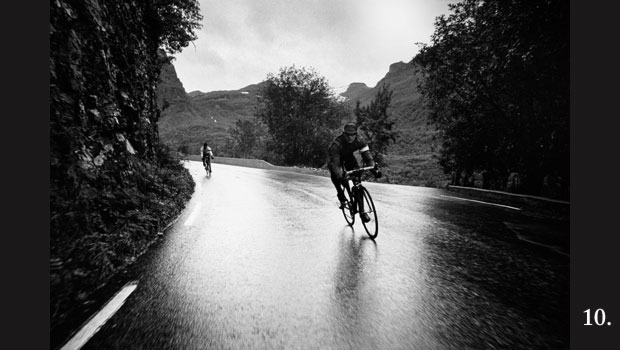
(photograph by Ben Ingham, available for purchase here)

For some, they watch Le Tour for the landscape and to dream of a sojourn in the Loire.  For others, it is the chateaux, the neat little villages, the churches and the glimpse of an eccentric little stone fort perched on the top of a craggy rock.   

Others watch for the Lycra clad men and the crashes.   Others for the Australians or the Americans or the British or the Spaniards.     


Others love the strategies, tactics and drug scandals.   Others, like me, are endlessly fascinated by the business proposition that is the Tour.    They pay how much to sponsor the time trial clock?  Yes, but think of the millions who watch.  It must be an investment which pays surely.    

Whatever it is,  there is something for everyone. 


I have a husband who is a mad cyclist.  Not commuting cycling.  No.  Cycling that involves riding  for 4 hours to Frankston and back on a Saturday morning.    Cycling that involves reading cycling blogs.  Buying beautifully written cycling coffee table books and touchingly trying to persuade me to read them.


Cycling that involves only ever wearing black with touches of  white - all sourced from the UK business, Rapha, who sells just the very best, sleek, high quality cycling gear.  Including a pink stowaway jacket, which I rather love.  And some wonderful jersey tops, in plain colours.  No fluoro.  No skin tones.  Just 1950s styling using hi tech and pure fabrics.  
   

Oh okay, here are a couple more:


My point is that the things men love, even if they are sporty or cave-like, are often no different in their manifestation to the things we love. 

And well we may ask, standing, watching, or dreaming.  What are we doing here?   


Cycling is a metaphor for life.  I didn't think of that first, many have got there before me.    
  
And like all obsessions, you need a book collection to go with.   So, to kick off the Tour, buy a book.  Here are some of mine ours:


The only one in the pile above I would not recommend is the second Lance book (Every Second Counts) - it's just a bit boring and self indulgent.    But all the others, especially the Escape Artist, about a man obsessed with the ride who is forced to grow up when his wife becomes seriously ill, are wonderful.


So, enjoy.  On all levels.  


(Images (1) (2) (4) (6) (7) (8) (9) Rapha (3) Cycling Tips) 

Monday, July 5, 2010

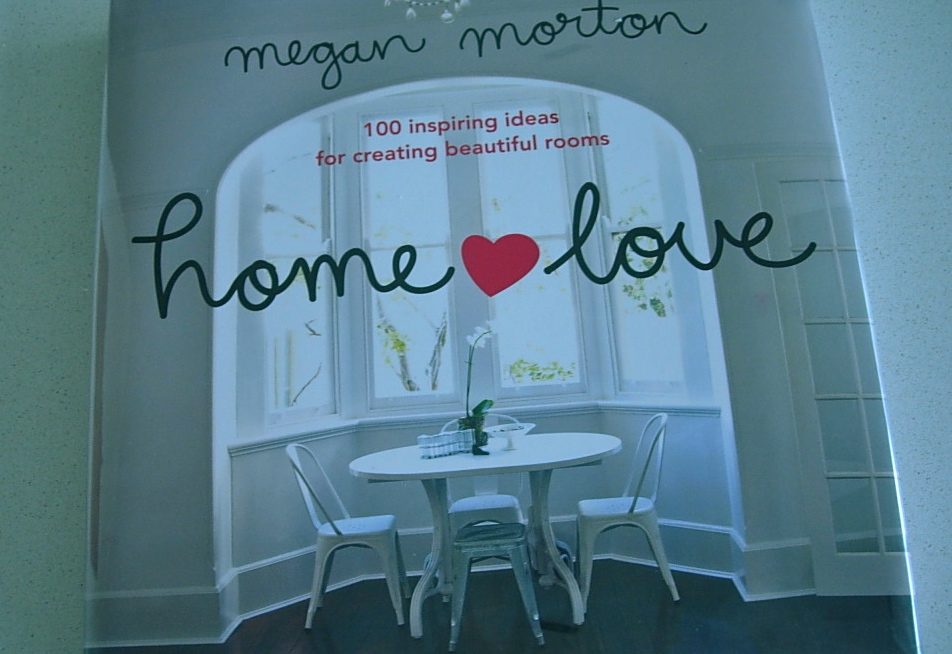
Megan Morton's Home Love - A Compulsory Acquisition

Do you sometimes buy a design book, stare at its cover with breathless expectation, leaf through it, slowly at first, then a bit faster and more angrily, close it, sigh and think 'Is that all there is?'

I do.  All the time.  And it is this disappointment which has led me to cut down severely on such purchases.    After all, these books are expensive, and there are many more and better things to spend one's money on. 

I feel that a lot of these books are just a collection of photos, sometimes well edited, sometimes not so.  And we can get so much eye candy on the internet these days that for me, to be real value for money, such books need to offer more.


Megan Morton's Home Love is something else.  Whilst it has some lovely images, the point of the book is actually to impart information.    To help and provide practical advice.


And for bumbling amateurs like me, a book like this is very useful.

Each double page has a topic, an image on one side and a page of discussion on the other.


The Rooms for Living section looks at ways to live now, including the hidden kitchen, pleasing an early teen, how to create an elegant night-time living room, working with and under a staircase and the benefits of a roof top conversion. 


Keeping Up Appearances considers how to create different styles - Scandinavian, coastal, bohemian, Australian rustic, uptown glamour, modern retro and so on.  This part also has a little section on the best films with inspired interiors from The Hours to All that Jazz. 

And, thrill of thrills, because this wonderful person is a Sydneysider, her references are Australian - which means that this book  works equally well as source book for all things from fabric and customised wallpaper, soft industrial furnishings, garage junk to Italian lighting and other delectable things including many which were new to me. 


Ultimately, it comes down to something quite simple:  Megan Morton can write really well - evocatively and simply with charming turn of phrase.  

To give you an idea, here is a little excerpt from a post on her site (see link below):

"I actually don’t approve generally of colour coding books in shelves. It’s like the overworked mini bar in my opinion. In the same way gerberas were over done in the mid 90’s or the more recent abuse of too much lettering/signage in a room."   (Hear hear).

(How I love this picture with the little bunches of ranunculi and a map of Australia in the background.)

Her Attention to Detail section looks those little things which are so important, including how to hang art, how to buy antiques and collectibles, working colours into white, using mirros and how to achieve flawless white floors. 


There is even a section at the back with some suggestions for ergonomic living and which flower is in season when.  


Rush out now, or click on Amazon, and buy this fantabulous book. 

For more on Megan, see the interview the Design Files did with her here and her website is here .

(All images copyright Home Love).


Friday, July 2, 2010

Camellias for all Hairdressers

One of the best things about living in a 100 year old house is the garden which comes with it.

We have 9 camellia trees, of varying sizes and shapes.  They have struggled mightily over the last few years - not enough water, too much sun, a 48 degree day which burnt their leaves off in 2009 and so on. 


But this year they have come good.   And are thriving.

These camellias come from the tree outside our study:


Here is one I cruelly picked before it had a chance to properly open:


When I took botanical illustration classes 5 years ago, camellias were the flower I turned to first:


You may be wondering what any of this has to do with hairdressers.  

Well, a few months ago my hairdresser noticed something not quite right on my scalp.  She scolded me and said I must go to the doctor.  It was a basal cell carcinoma, and a little operation a few weeks ago and 10 staples in my head later, it is all pretty much gone (we hope).   

You may say - of course she should have mentioned that.  But I think that many people wouldn't bother.  And she did and I am grateful.     And it happens that I have a history of skin cancer in my family so I do need to pay attention to such matters.   

I have not actually sunbaked since I was 15.  But these things do keep appearing on my pale surface.    It is a real issue in Australia.   The sun is just so strong, and it penetrates you like the heat from an oven.    And leaving aside the health risk, growing up in Australia in the 1970s with white skin was not that easy.   No one knew of the dangers of the sun.  It was quite normal to spend the day on the beach and burn one's skin to a crisp and watch it then blister and peel.  And there was no proper fake tan (remember Sudden Tan, which came in a foam tin and made your skin go orange) and lots of taunts from school friends newly returned, honey coloured, from Noosa.  Now of course we have Cate Blanchett and others to admire.  Then, one had to really turn the other cheek.   

So, for bothering, Gloria, thank you.   

And I must mention an upside of  my paleness.  Not as many wrinkles as I would otherwise have.   At least that is what I tell myself.   And whilst I don't go as far as Nicole Kidman who apparently 'wears a hat to cross the street'* (oh right so that's why her skin is so perfect), go to Little Augury here to see in art and photos how wonderful a parasol can look. 

Happy winter sunny weekend to you all. 


* this is what Naomi Watts, her friend, once said in an interview.  


Wednesday, June 30, 2010

A Dilemma of a Coffee Table Nature

Major disclaimer:  Solving this dilemma will not solve any of the real dilemmas facing Australia today like homelessness, our failure to encourage renewable energy investment, the division between rich and poor or our obsession with footballers and swimmers.   

But to me, it is still a dilemma.

Everyone has something they will never have in their home.  Mostly, that thing will be in the nature of finishes: marble is a common dislike, as are certain kinds of tiles or other flooring like cork or parquetry.  Or maybe mahogany furniture is not permitted to cross the threshold. 

For me, it is coffee tables.  Or should I say, for my husband it is coffee tables.  He loathes them.  He won't have any in the house.  Ever.  Under any circumstances.     He says that they are Always Ugly.    in fact, there is no coffee table I can show him which he will like.  


This is kind of an issue for me.  I would really like a coffee table in one of our sitting rooms.   After all, they really draw a space together.  On the other hand, they have lethal corners just ready to cut a little running and falling head.

In building my case for a coffee table I collected images of ones I like, and I find that they (and in fact the rooms they are in) all have similarities:

They are either glassy and wrought iron:
.  

Or acrylic or lucite:


Or a low interesting wood texture: 


More lucite:


More gold'n'glass:  


More lucite:


And look at this divine oval thingy:


So, this is my idea.

Who amongst us hasn't said, in response to a question from spouse\partner\accomplice 'Is that new?' about a [insert new item of absurdly unnecessary clothing]:  "What?  This old thing?  I have had it for years.'

What about a coffee table which is barely noticeable?  Something see through.  If I secrete it away, by the time it is noticed I will be able to honestly say I have had it forever and it will be too late to trash.

I am sure that lucite is as yesterday as Tuesday, but I still rather like them.  

So, my question is - is this a good plan or a bad one?  Do I live with the no coffee table ban for ever?  Or find a dasterdly way to get around it? 

(Images: (1) Gunkelman Flesher (2) (10) Angie Hranowsky (3) Nina Vintage Files @ wordpress (4) Decorpad (5) (6) (7) DecorPad (8) Elle Decor (9) Apartment Therapy  (11) Vogue Living Australia)

Monday, June 28, 2010

Winter in Melbourne - Tomatoes and Mushrooms for Comfort

Winter is the time for newspapers and magazines to wheel out articles about comfort food.   What is the local celebrity chef's favourite 'comfort food'?    It's probably noodles, soup, a stew or braise or some other heavy carbohydratey, meaty concoction 

This is not comfort food to me.  

To me,  comfort food is a simple feast which evokes memories of childhood or a happy time.    That is what brings succour to the soul and explains why we cook these dishes again and again, and in the depths of winter when our thoughts can turn to the past.  

This is Wootton Manor, the 17th century listed house in Sussex in which Elizabeth David, cookery writer, grew up.   A number of extensions were added by family friend, the architect Detmar Blow, (Isabella Blow married his namesake and grandson) including a staircase hall, library, ballroom and nurseries, resulting in an interesting yet harmonious Arts and Crafts - Jacobean house.  

Is it any wonder Elizabeth David became such a sparkling writer?  She may not have had a completely idyllic childhood, but she was surrounded by wit and stimulating intellects:  Walter De La Mare and Rudyard Kipling were local and frequent visitors.  


Here is Elizabeth David (second from right) in 1923 with her father and mother Stella and Rupert Gwynne) and her sisters Felicite, Priscilla and Diana.


Like all children of that class and era, she was largely raised by her nanny, in her case, one Nanny Cheshire, who used to cook the girls little treats on the open fire in the nursery.  These were oases in a desert of junket, tapioca, boiled turnip tops and spinach, mutton and dry rice pudding.   Until they turned eleven, the girls were only permitted to dine with their parents once a week, at Sunday lunch.  

The dish which sticks in my memory, and of which Elizabeth David wrote so evocatively, was that of mushrooms in cream.

The girls would venture out in the early morning to pick the tiny button mushrooms which grew in the field beyond the bluebell wood.   They then brought the mushrooms back to Nanny, who would briefly saute the mushrooms and pour cream over them.    Once the cream has bubbled and reduced a bit, they would be ready to eat.  

This is a wonderful dish which I cook frequently finished with freshly ground pepper and chopped parsley. 

My comfort food is equally simple.   Cold tomato on hot toast.  My mother used to make this for me when I was little.    It is a little funny how something so mundane can be so good. But that is the way of life sometimes. 

Like all things so simple, there are a number of requirements which must always be met:

The toast must be proper thick sourdough.   It must be spread with butter.  Tomatoes must be sliced thinly and then drizzled with olive oil and Maldon salt.    The tomatoes have to come from the fridge, even though I don't usually keep them there.   

The contrast between the hot toast and coldish tomato is taste heaven.  Truly.   


And now I force my children to eat it too and they love it!  So the cycle continues.  

Friday, June 25, 2010

All Pared Down

Winter is a great time to pare down.  Forget spring cleaning, who wants to be sorting through old jumpers when the sun is shining?

Winter for me is the time to:

  • clean out my wardrobe and donate all old clothes to the Salvos.  I cannot make myself sell my old clothes.   When there are people queuing for stuff at the place I go to in St Kilda, it just seems wrong. 
  • throw out old kitchen bits of plastic which the children have grown out of.
  • sort though endless bits of paper.
  • most importantly, remove bits of furniture which just aren't working.  

I think when you spend time reading magazines and blogs, it is easy to be overwhelmed by the way things look, and to be drawn into a vortex of thinking that you need more Stuff.  More cushions.  More side tables.  More bibs and bobs.  More.  More. More.   Of course that can't be right.   I am certain that most of us need less than we have.  

It is a big trap which I am increasingly wary of.   

As it happens, I feel at my best in rooms like this.  It creates an almost emotional response.   It makes me feel calm.   Not just because of the clean lines but because of the absence of stuff. 


Whereas this room concerns me a lot.    Extreme example I know but there are a lot of overfilled rooms out there.   


This room again, with just a couple of special pieces, has the patina of age and modernity all in one.     


Same story here.  


But this room?  I do realise that Miles Redd is a great designer and all that but really, does any one person actually need five lamps in their bedroom?   There is just so much Stuff in here it makes me feel seriously anxious.  


My daughter and Miles Redd would get on like a house on fire.   She won't throw anything out and hoards and hoards and hoards.   She also loves to cover surfaces with Things.  And she is a lover of Piles of Books too.    All of her stuff was audited and listed by me here.   So it seems we have a little corner of Architectural Digest in our house.  It's called Imogen's bedroom:


(carefully cropped and edited section of bedroom. The whole room is like this but if I showed you any more it would be quite alarming) 

So in honour of paring down, I removed all the bits and pieces from the mantelpiece in the front room, as part of ongoing project to de-clutter it, and came up with this:


(ridiculously small mirror to remind me to save up for ridiculously large mirror to go over mantelpiece)

This is my inside winterscape for the next month - willow and magnolias.   

So this weekend, I will be doing some more packing, storage, culling, cleaning, and folding, just in time for spring, if it ever comes.  

ps thanks for all the lovely comments this week, and also to new readers and visitors. xoxo

(Images (1)(3) Remodelista (2) (4) Architectural Digest (5) Miles Redd) 

Tuesday, June 22, 2010

Winter in Melbourne - Art for the Hanging

If you spend a lot of time inside during winter staring at walls, not only do you go stir crazy, but eventually it comes to you that you should buy some art to hang.

And in winter, that means to me, landscapes.

I love the look of a landscape hanging in a pristine room, like this. In fact I just love everything about this room, but mostly its tranquillity and the fact that the painting is allowed to speak, without needing to shout. 


(via Remodelista)

This is Vincent D'Onofrio's 5 storey townhouse, decorated by Jan Eleni.  If you can't have a gilded mirror above your fireplace, I think a moody landscape does just as well, if not better. 


And these are some of my current favourite (living) landscape painters.  This is by Darren Gannon, represented by Libby Edwards.   The thing about landscape painting is that you cannot skate by on poor technique or low quality materials.  It really shows up your skills.  


Early Start  -  2010  (oil on canvas)


This is by Geoff Dyer, a very well regarded Tasmanian painter.    Aim high, and you too can have a Dyer.   He is not a cheap artist.   But look at the depth, and indeed, emotion of that stormy sea. 


Climate 1 (2009)

These little ones (not a triptych, maybe a nono-tych) are by Jennifer Shears and you can find them here on Etsy.   Aren't they exquisite?   All the different cloud moods are represented.  


This is by Alexander Mackenzie, an Australian artist about whom I have previously written.  


The Third Island (2009) 0il on linen

Here is another Jennifer Shears.


And these are by Swedish artist Peter Freis. I am indebted to Monika at Splendid Willow for alerting me to this wonderful artist. Born in 1947 (just like Geoff Dyer), he is represented by this gallery in Stockholm.   


I hope you all have a serene Tuesday.


Related Posts with Thumbnails